
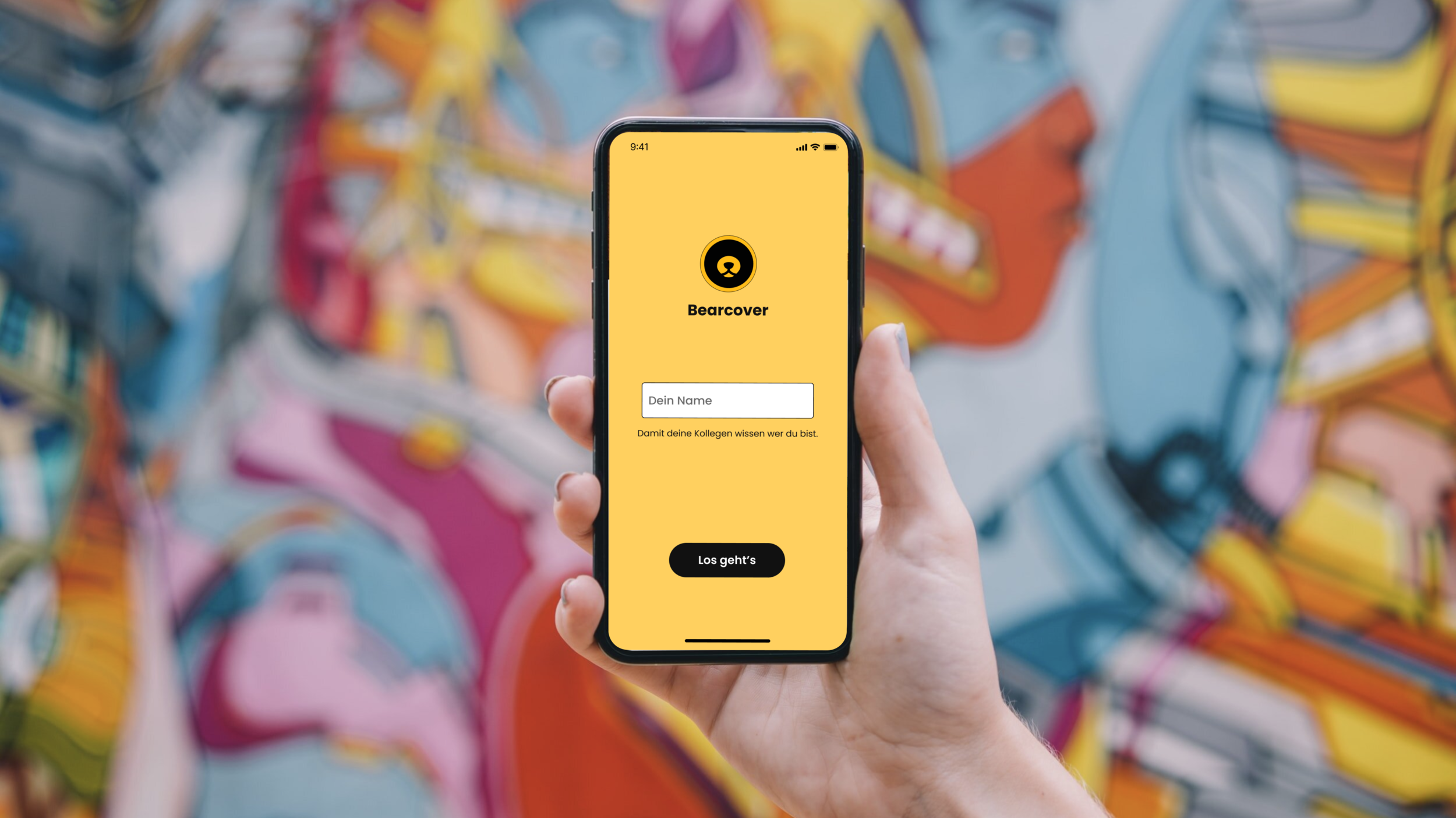
Bearcover (App)
Bearcover is a startup based in Berlin, Germany; which supports nursing home night staff using robotics and radar technology. Bearcover robots operate on corridors and perform basic health and movement checks on residents, while the app alerts staff of any abnormalities. Learn more about Bearcover here.

Background.
Understanding the problem.
Night shifts are a major concern for nursing homes across the globe. Residents could easily go unnoticed for hours on end. We needed an app that would alert carers effectively, while providing simple yet complete information, and easy interactions that would allow carers to quickly complete their task get to where they need to be.
The hypothesis.
Staff are notified of any abnormalities by receiving an alert via the mobile app, and can easily see and manage abnormality alerts within the app. This solution would be time and cost-effective, while freeing staff from routine checks and allowing more time for quality care.
My role.
I joined Bearcover as the sole UX/UI designer for the mobile app. My responsibility was to speak with and understand the problems that night staff face, as well as general acceptance/aptitude for new technology in the workplace - and to design and test an enjoyable mobile user flow that works alongside the robot.
Interview Irish directors of nursing.
Research competitor and similar apps. As Bearcover is a service that has never been provided before, it wasn’t possible to do a direct competitor benchmark. Instead, I looked at medical app case studies and alert apps.
Design an enjoyable and simple mobile user flow. I designed user flow prototypes on Figma which were put through usability tests with several Irish nursing home staff.
Create a prototype and wireframe for development.

Research.
Market differentiations.
Bearcover was being deployed in Germany, but at the time I only had access to Irish nursing homes due to language barrier.
Gathering user context and background.
By asking open-ended questions with several nursing homes in Ireland, I was able to determine common needs, existing software, and understand average tech literacy.
I was not sure whether the same issues and needs in Irish nursing homes translated to German nursing homes, but the user flows were designed based on Irish feedback, with prototype usability tests being run in both Ireland and Germany.
As the Bearcover service is something that has never been done before, I approached the initial design by researching existing medical and alert apps. Once I understood how similar apps worked, I designed an initial flow which was then tested via usability tests with Irish directors of nursing.
.

Design.
The main considerations.
The app needed to be simple to accommodate users of a large age range, and language needed to be flexible for those who did not speak German natively.
High fidelity prototype.
The final version 1 design was inspired by the simplicity of the Gmail app. Although not a medical alert service, it functions with basic notifications and a comprehensible UI.
Based on user interviews and usability tests of previous versions, I decided to keep interactions tap and buttons-based, as many older users would not have thought to use interactions like swiping. This may have sacrificed a little bit of the “modern” feel many apps have today, but this was the best design choice given the target users.
The first iteration included carer-to-carer communications and several types of alerts, but this created too much complexity that took away from the main functionality of Bearcover. I realised this quickly and suggested we dial back the focus to optimise Bearcover’s main selling feature - alerts that work alongside robots.
Wireframe.
As part of the handover package, the wireframe helped the development team understand the rules and feedback which may not be clear in the prototype. This was used in conjuction with Figma and I also worked with the team during development to make sure the interactions worked seamlessly across different types of mobile devices.
.

The Future.
Where we are now.
Version 1 has officially been deployed in Dresden, Germany. I am continually working with our users, development, and the founding team to bring improvements to version 2.
Where we are going.
Once the current experience has been optimised, we would also like to incorporate staff-to-staff communications within the app. This would streamline the alert system and allow staff to call for help seamlessly within the app.